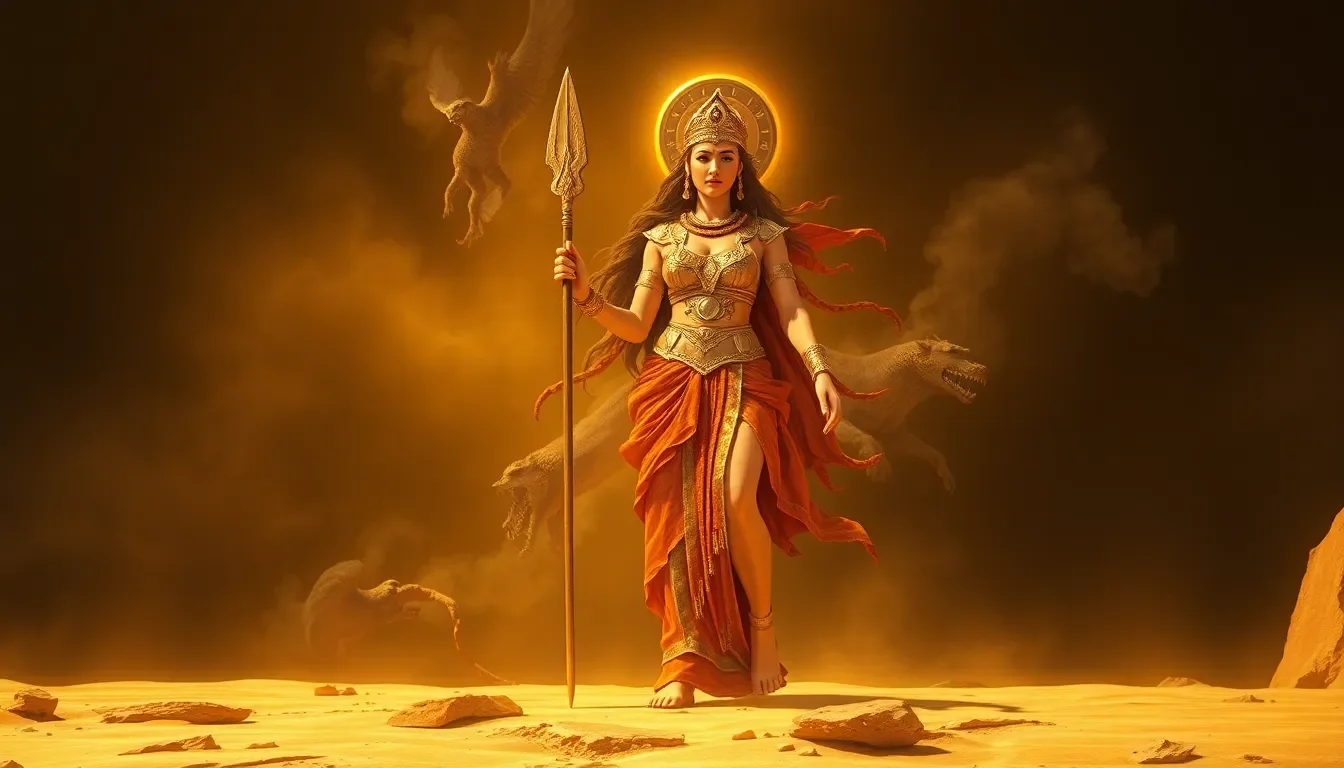
As we continue our series exploring how mythological figures provide insight into ourselves through their placement in our astrological chart, I want to look next at Inanna, aka Ishtar. Simply put, she is the goddess who strips away all her belongings as she moves through the gates into the underworld. While the myth originates with the Sumerian goddess Inanna, we track her as asteroid 708 Ishtar in the astrological chart, where she assumes all parts of the myth.
As we have looked at other asteroid Goddesses in this series so far, we have seen how Medusa shows us how to maintain our boundaries, trust our instincts, and stop apologizing. Pallas-Athena represents our strategic wisdom, and Persephone shows us where we are learning to move between the dark and the light.
The common thread between these is that outside influences initiated their stories. This is where Ishtar differs. No one else forced her to descend through the seven gates. She chose to go of her own accord. Ishtar’s story is one of intentional, self-motivated transformation. Stepping away from the comforts of the upper world to face what she has avoided. In our charts, she shows us where we have mistaken our armor for our identity, where we must surrender the need to perform to please others, and where we are meant to strip away protections and show up authentically as ourselves.

To understand this better, let’s take a look at Ishtar’s myth.
In Ishtar’s myth, she begins as the Sovereign Queen of the Upper World. Ruling supreme in the sunlit world and the heavens. She is vibrant, ambitious, and radiant, holding dominion over love, war, fertility, and political power-her status is tied to what she has. She wears a crown, carries a lapis lazuli measuring rod, and is draped in gorgeous royal robes, beads, and pearls, with a gold ring and breastplate. The problem is that her adoration comes from what she has- she is beloved because of her titles, regalia, and brilliance. She has not faced who she is without all of the external armor when everything is stripped away.
Ishtar makes the decision to descend into the world of her estranged twin, Ereshkigal. Realizing that true sovereignty cannot be claimed if she only knows the luxury and adoration of the upper world. Whether driven by ambition to expand her dominion or by an inner necessity to meet her shadow and integrate all parts of herself, she ultimately decides to descend into the underworld. She approaches the gates fully dressed in her royal regalia and divine powers and asks to be let in.
As she steps through to the underworld, she must pass through seven gates. At each gate, the gatekeeper requires her to strip away one item of clothing representative of her power and status until she stands naked, ready to greet her twin in the depths of the underworld. Ishtar does not fight this transformation; she voluntarily removes what she is asked to.
The Seven Gates
At the First Gate, she sets down her crown. Giving up public status, titles, and the ego’s need to rule.
At the Second Gate, she gives up her Lapis Lazuli Measuring Rod- releasing the need for absolute control, strict logic, and perfectionist judgment.
At the Third Gate, she gives up her Lapis Neck Beads- releasing the need for external validation and vocal approval.
At the Fourth Gate, she gives up her Double Stranded Pearls, releasing emotional armor, aesthetic perfection, and the need to be desirable.
At the Fifth Gate, she gives up her Gold Ring- releasing relational dependency and the contract that promises security and safety.
At the Sixth Gate, she gives up her Breastplate- releasing protective rage, defensive shields, or protection, and the illusion of being invulnerable.
At the Seventh Gate, she gives up her Royal Robe- releasing her persona. Stepping into the deepest chamber completely naked and stripped of every defense.
Ishtar stands naked before her twin Ereshkigal, who strikes her down and transforms her into a corpse, hanging her body on a meat hook. For three days and nights she hangs in complete darkness and silence. Trapped in the dark, without any protection from her old identity. Powerless to rescue herself, she cries out.
When the upper world realizes that something is wrong, help is sent. Her rescuers do not show up as warriors ready to battle for her release. Instead, two small, compassionate beings descend into the dark and simply witness her pain. They mirror her back, chanting “woe for your inside, woe for your outside,” offering pure, non-judgmental validation. Ereshkigal, touched by their compassion, offers them gifts. Refusing silver and gold, they ask simply for Ishtar’s body.

Ishtar is then revived when she is sprinkled with the water and food of life. She stands up and begins her journey back through the gates, reclaiming what she had left behind. However, she does not put these items back on as armor to hide her vulnerability or to demand validation. Having been stripped naked and vulnerable, she knows that her worth is not in what she wears, but instead lies in the unapologetic, raw version of herself. She walks back up through the gates, fully integrated and powerful, recognizing her true self when everything is stripped away.
What this means for us in our astrological charts
In your chart, the house where Ishtar shows up shows the area of life where the armor can be mistaken for true identity. Where we tend to perform, please, or act invincible to feel safe.
Ishtar is not asking us to throw away our talents, our successes, or our regalia forever. She asks us to release the need to over-identify with them. To step through the gates, strip off the armor we are hiding behind, and realize that if we lose our titles, our true power still remains.
One of the most sacred lessons we gain from Ishtar’s myth is seeing her at the bottom, stripped of everything, hanging from the meat hook, unable to fight her way out. She does not need advice, to be told to look on the bright side, or a savior to come in and save her. She needs to be witnessed fully. In our natal charts, Ishtar tells us where quick fixes and unsolicited advice fail. Where you must learn to stop “fixing” and instead honor our truth. This placement is asking for you to seek out or become yourself a quiet witness, being willing to sit in the uncomfortable, listen without judgment, and offer pure self-compassion.

Reclaiming Your Sovereign Self
If you’re reading this, you might be asking yourself: Why would I intentionally want to step through the gates and strip away my armor? I built these protections for a reason.
We don’t create defenses out of nowhere. We become the caretaker, the perfectionist, the high-achiever, or the person who has it all together because at some point in our lives, that role kept us safe. But eventually, the armor we built to protect ourselves starts to feel like a heavy cage.
This is why looking up Asteroid Ishtar (708) in your chart is so powerful. She highlights the area of life where you might be feeling exhausted from keeping up a performance, trapped in a dark night of the soul, or wondering if anyone actually sees the real you behind the roles you play. Ishtar doesn’t ask you to suffer—she shows you where you are finally ready to be free.
She reminds us that true power is not built on the titles we hold, the status we earn, or the shields we hide behind. True power is what remains when all of those things are set down at the gate. When you stop trying to “fix” your darkness and allow your raw truth to be witnessed with radical self-compassion, you step into an unshakeable sovereignty that no external circumstance can ever take from you.
Ready to find out where Ishtar shows up in your life?
Understanding her placement in your natal chart offers a personalized roadmap through your gates of initiation—showing you where you carry heavy armor, how to heal without judgment, and how to reclaim your authentic strength.
If you’re ready to understand your unique placement, click here to book a personal birth chart reading: https://www.jessicamorleyastrology.com/services. Let’s look at your chart together and uncover the true power waiting beneath your armor.
Thank you for reading and for being willing to look at the shadows. I truly believe that when we are willing to look at these archetypes in our own charts, we gain greater clarity about ourselves
Jess